Edge zones for less brown water
Mobilization for functional buffer zones and reduced brownification.
About the project
In Kalvsjön, the visibility depth has periodically decreased to about one meter, which is roughly half compared to 30 years ago. An important reason is brownification – that the water takes on a darker color when dissolved organic substances, so-called humic substances, are transported from the soil to streams and lakes. The transport of dissolved organic carbon, iron, and particles affects water quality and worsens the conditions for fish, aquatic plants, and other aquatic organisms.
Kalvs Fishery Management Area Association therefore wants to spread knowledge about brownification and mobilize landowners in the catchment area to create and manage functional buffer zones along streams and ditches. A functional buffer zone is a vegetated area, often 10–30 meters wide, that protects the aquatic environment by filtering humic substances and particles, reducing erosion, and stabilizing the soil. When buffer zones function well, the export of dissolved organic carbon and other substances to the water decreases.
The project targets landowners in the area from Ambjörnarp in the north to Fegen in the south, with a focus on Svenljunga and Tranemo municipalities. Through concrete management advice, local examples, and dialogue, the association aims to strengthen landowners' knowledge of how buffer zones can be developed to become ecologically functional.
Competition will spread interest
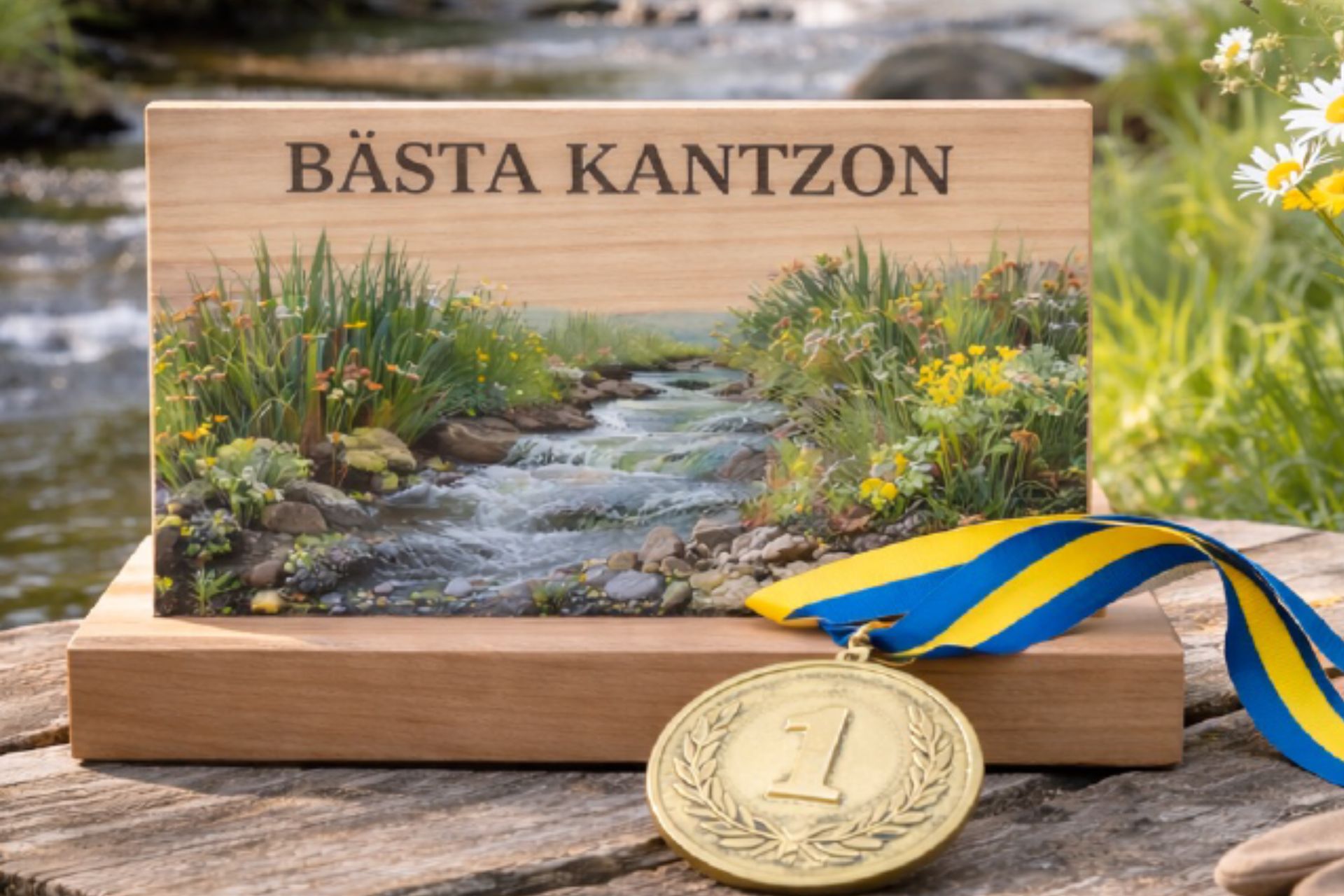
The initiative includes information mailings to about 500 landowners, an active website with local examples, press efforts, as well as public events and excursions at watercourses. In addition, a demonstration trail will be established to serve as a meeting place and educational environment for landowners, organizations, and the public. To create engagement, the association announces a competition where landowners who implement measures to reduce brownification can be recognized and awarded by an expert jury with the support of sponsors.
The project builds on previous work with nature and fishery management plans, developed management advice for reference streams, and collaboration with the Ätran water council, the Forestry Agency, Södra, and researchers. The goal is for more landowners to create and manage functional buffer zones and thereby contribute to reduced transport of dissolved organic substances and particles to the water, which in the long term can improve water quality.
Cut from the application
”The project will spread knowledge about brownification, how to create functional buffer zones, and mobilize landowners to contribute to sustainable water quality.”
The board's decision justification
The project will mobilize and inform landowners about the impact of forestry on water. Through sponsor searches and a competition, landowners will be inspired to implement measures and spread successes. The project can contribute to the improvement of water as an ecosystem. The results can be disseminated to other areas. The project builds a strong collaboration network between all three sectors.
About the project
Project period
2026-2028
Project owner
Kalvs Fishery Management Area Association
Project Manager
Sven Bartilsson
sven@bartilsson.se
Web and social media
Web page
The project in the media
Borås Tidning 26-03-22: Announces competition to improve lakes and watercourses (behind paywall)
Have you read or heard about the project in the media? Please share the article or broadcast with us: info@leader-sjuharad.se.
About the financing
Granted leader support
647,048 SEK
Co-financing
Kalvs FVOF: 70,000 SEK
Forestry Agency: 16,320 SEK
Total financing
733,368 SEK
In addition to the above, the project estimates that it will contribute volunteer engagement worth 586,580 kr.
The Leader support consists of funding from the EU, the state and the municipalities of Sjuhärad.
Incoming EU funds have been granted from:
Rural Development Fund