Nyhagen's garden is one of four demonstration sites established within the framework of EcoBoost. A display site is an area where we show how to improve biodiversity or create environments that make a positive difference for nature. Here you can follow the work on the site – from the first visit to the finished facility. Behind the keys is Katarina Berlin Thorell, project manager for EkoBoost.
2026-08-04
A scorching inauguration
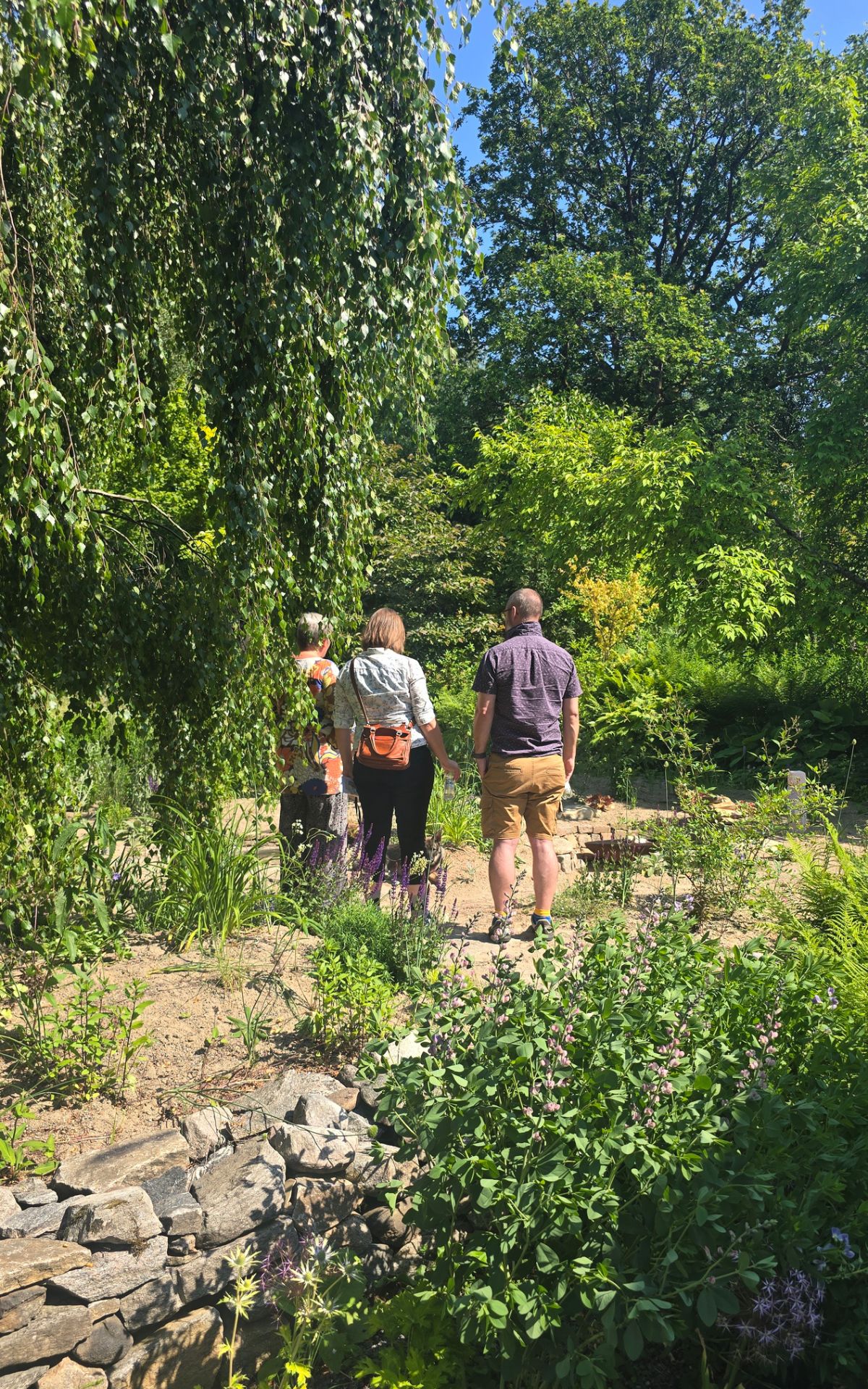
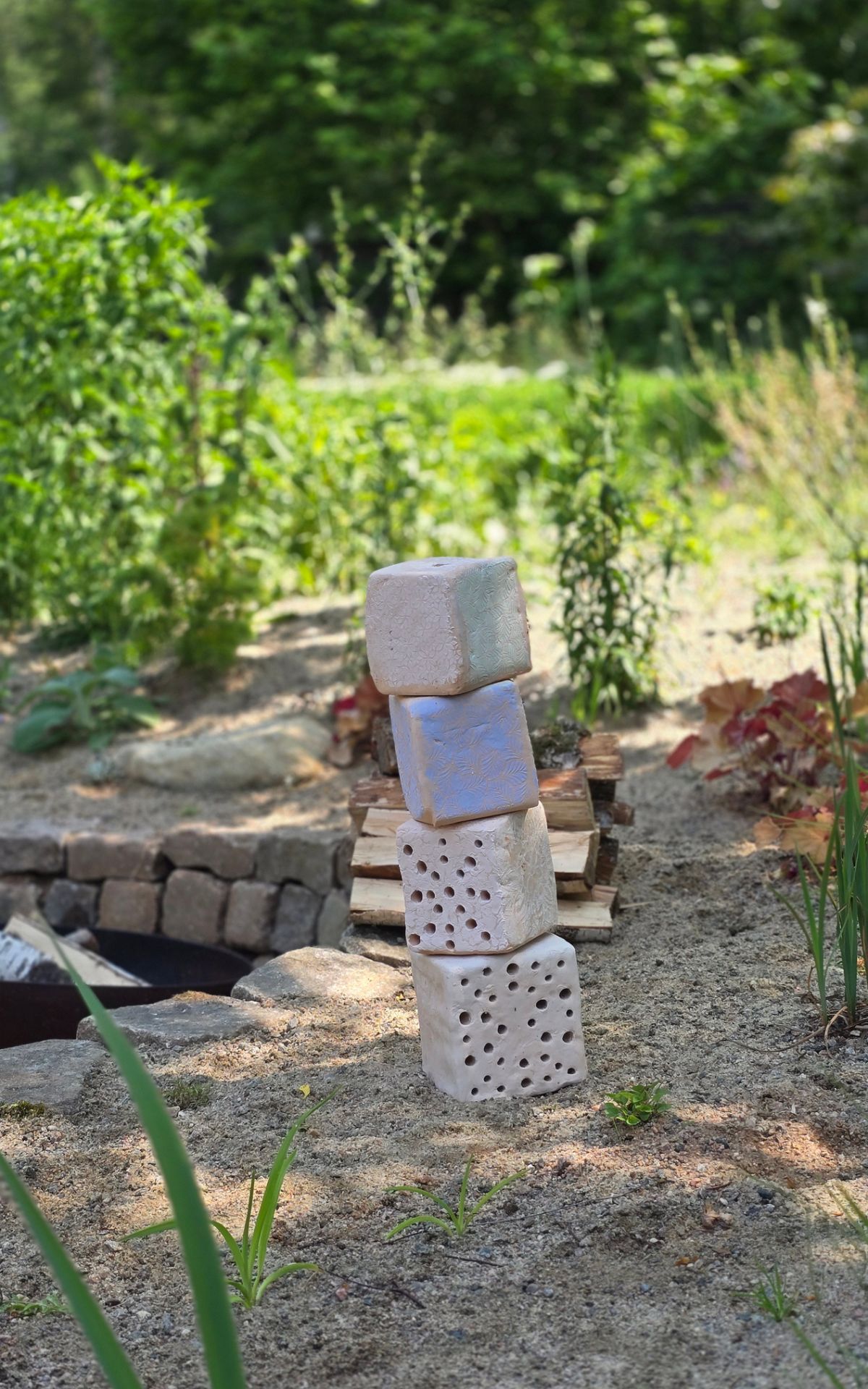
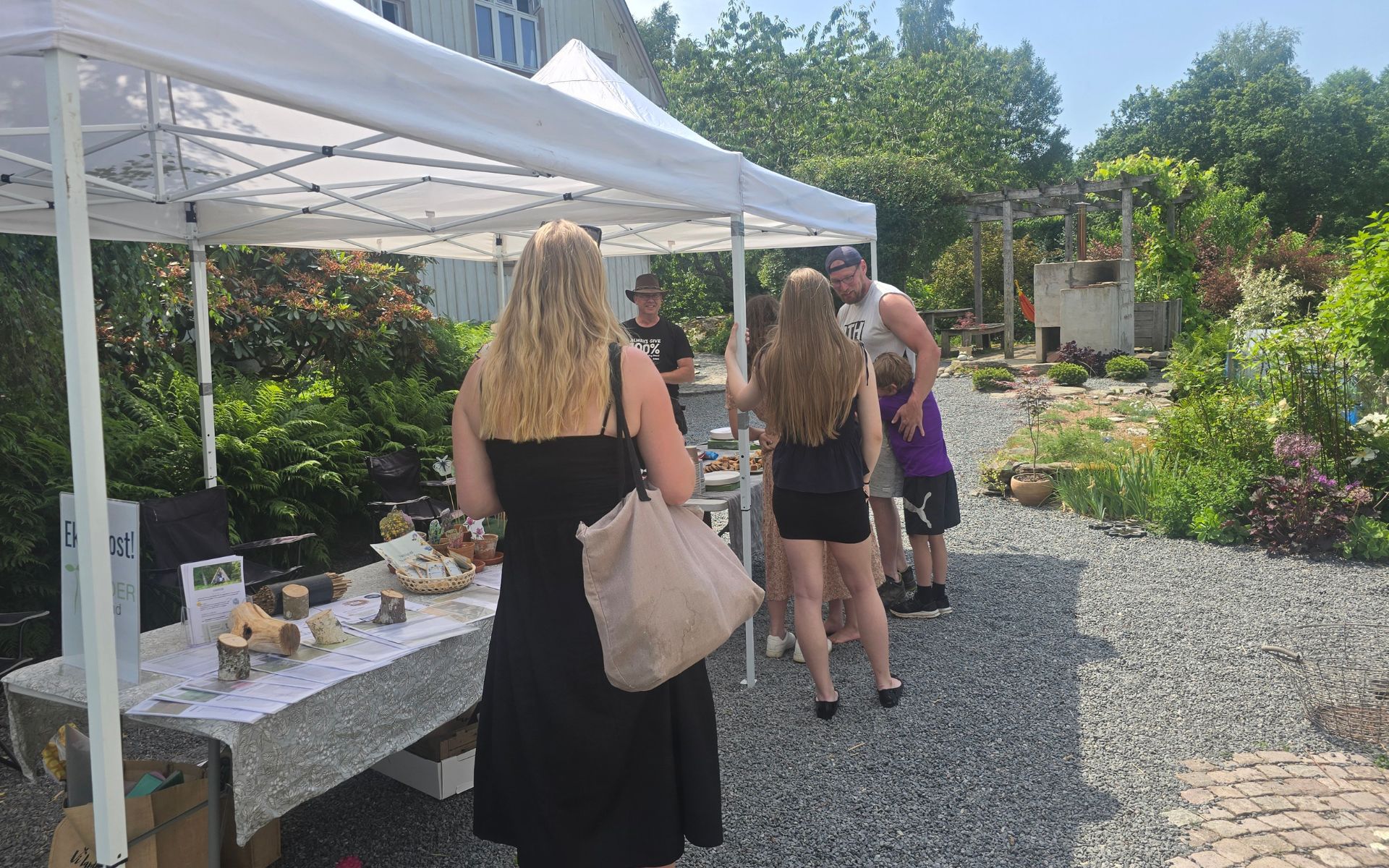
On June 27, it was time for the inauguration of the demonstration site at Nyhagen's garden. It happened to be one of the hottest days of the summer, with temperatures rising above 30 degrees. Some interested enthusiasts braved the heat and visited the inauguration instead of going to the beach. Sara guided the visitors through all parts of the garden where we saw, among other things, the new sand and meadow planting, newly established insect hotels, stone walls for frog and reptile hibernation, and the sandy paths in the existing large meadow. There was plenty of time for questions and the opportunity to take part in Leader Sjuhärad's inspiration material on biodiversity. If you couldn't make it to the inauguration, you can visit at another time. Please contact Sara or Magnus before your visit so they can show and tell you about the garden.
2026-06-04
The inauguration is approaching…
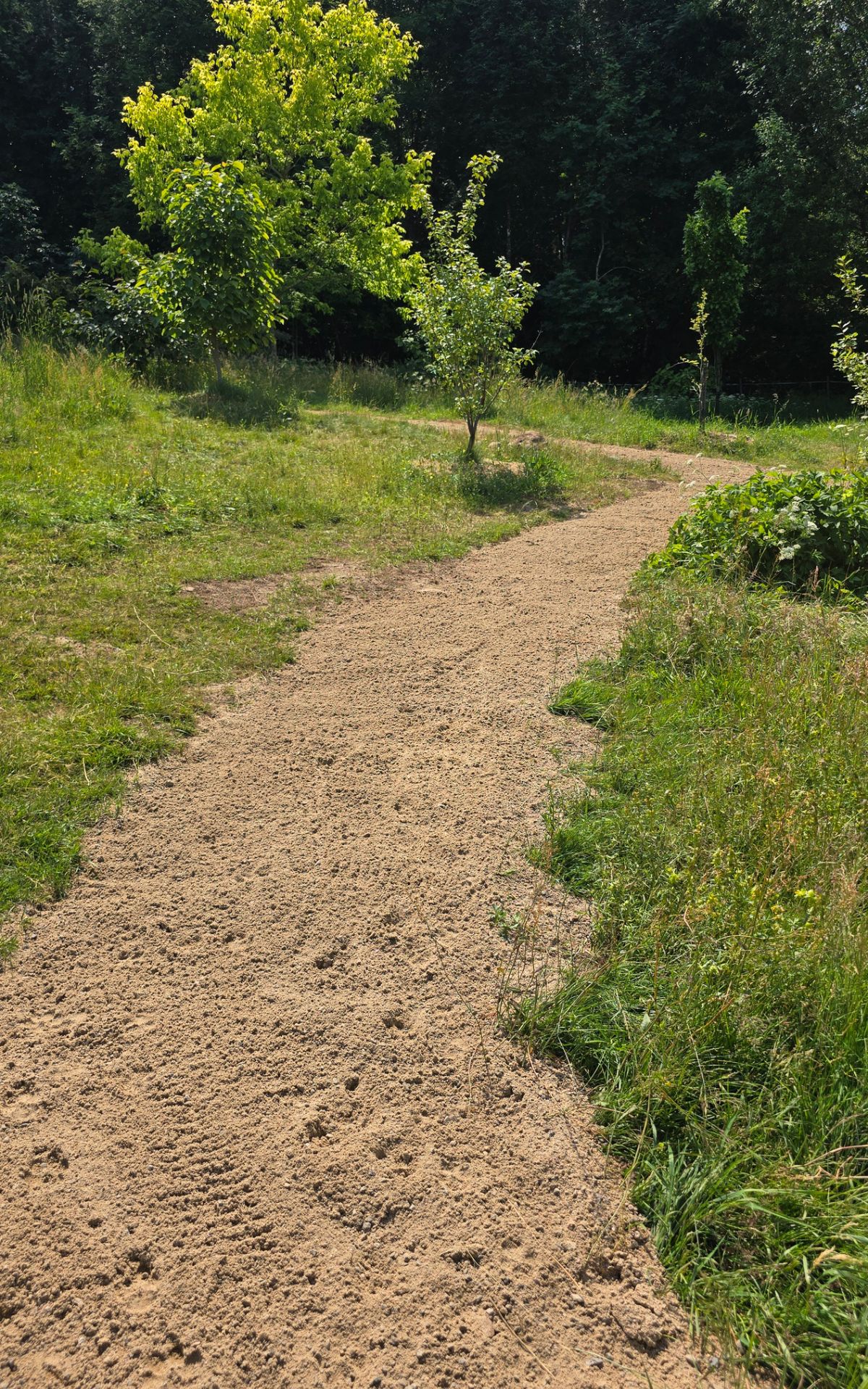
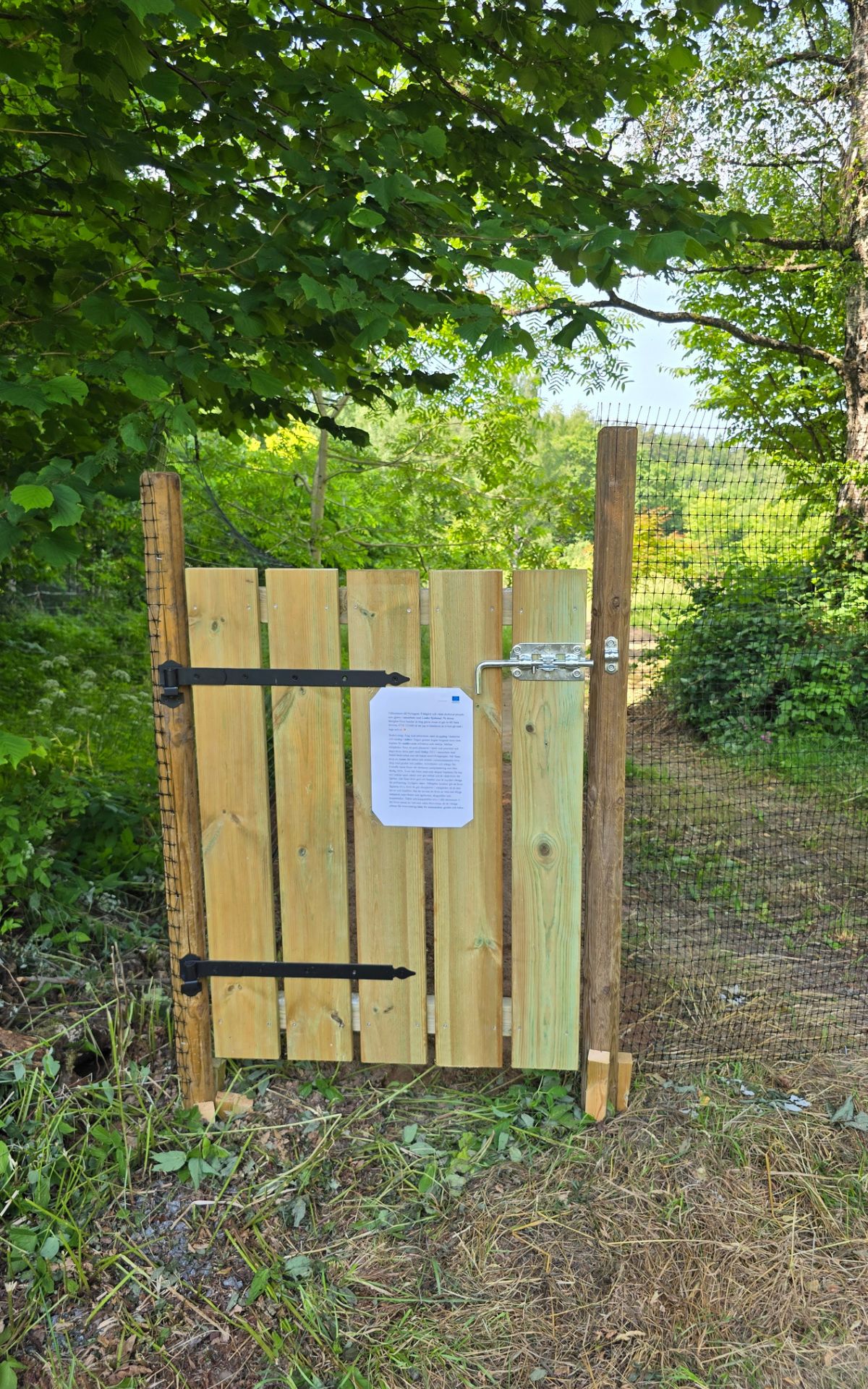
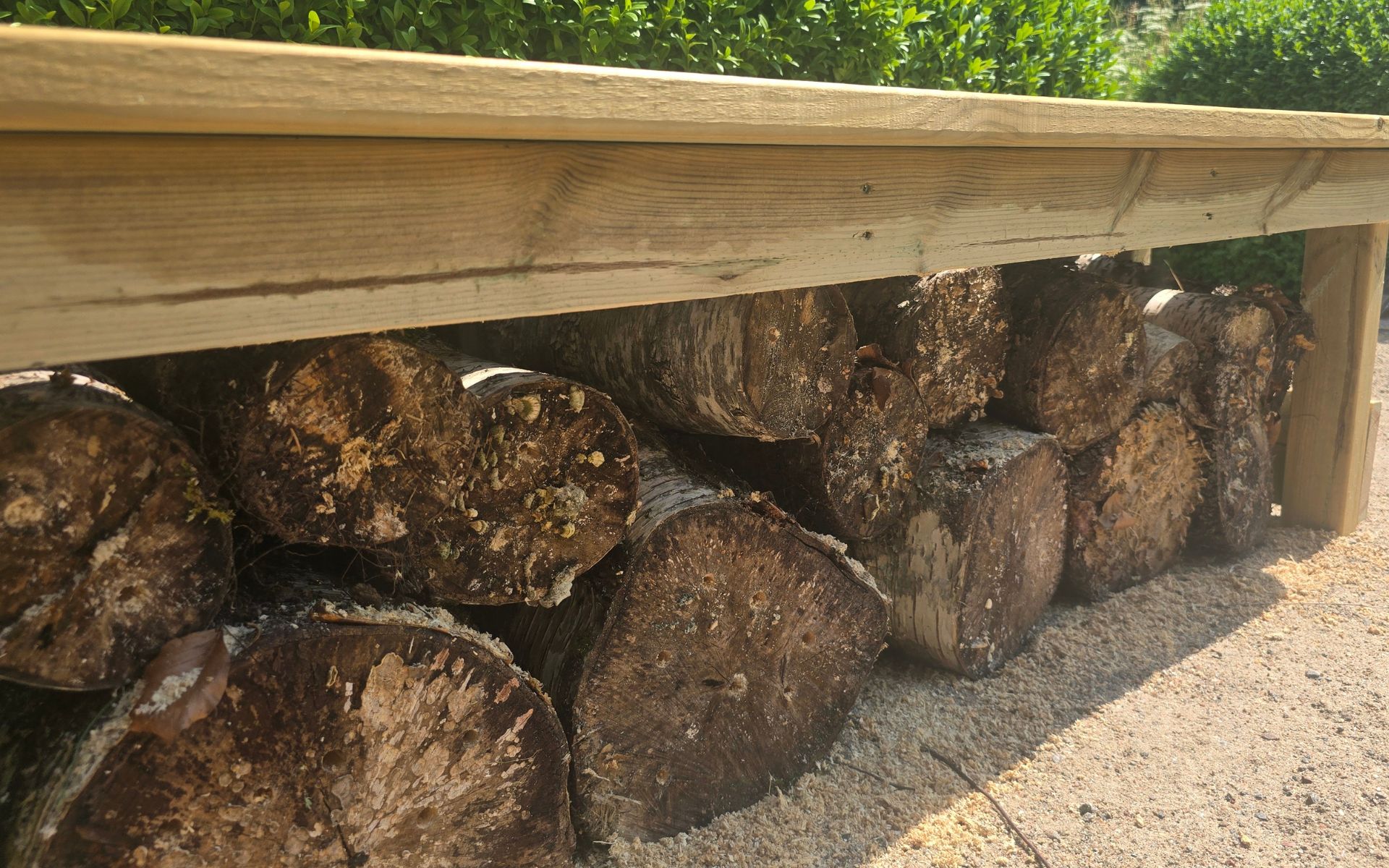
After a long winter with cold and frost, work on the demonstration site at Nyhagen's Garden eventually resumed. And now the final touches are to be completed before the inauguration on June 27. The major work of creating sandy paths in the meadow has recently begun, and in the pictures, you can see all the sand that will be distributed to the paths. Seating around the new meadow planting has also been built, and a new entrance will be put in place. Saturday, June 27, from 1 PM to 5 PM, is therefore the time for the inauguration.We will learn more about both sand piles, salamanders, ants, flowers, and bees, and much more! Hope to see you there!
(The pictures are taken by Sara and Magnus Brenne)


2025-11-12
Sand planting instead of lawn
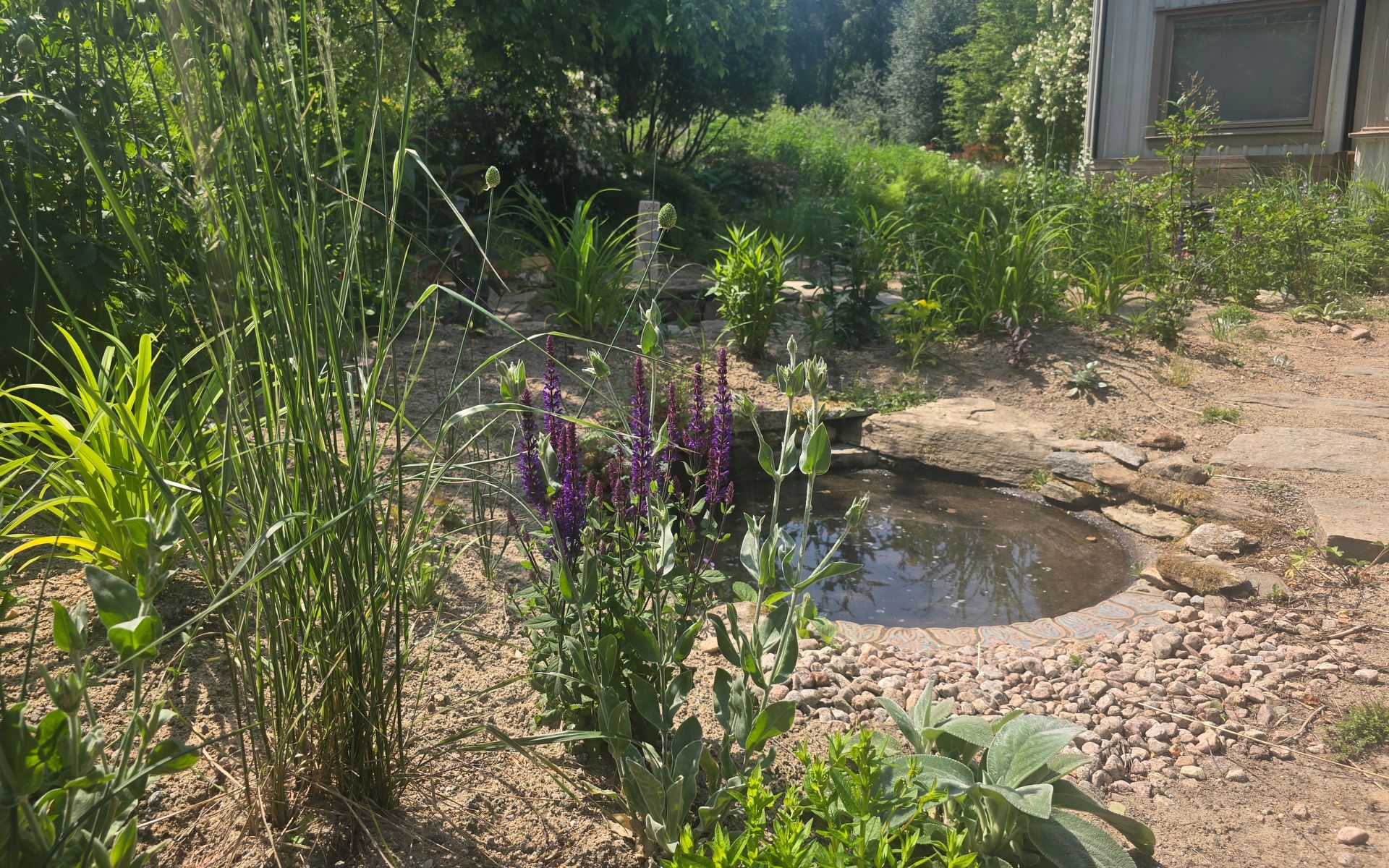
During the summer and autumn, work on the demonstration site at Nyhagen's Garden has continued. The lawn in front of the house has now been excavated, and a layer of sand has been laid down. In the sand, a variety of dry-loving meadow plants and perennials have been planted. A small pond has also been created here. Already during the work on this area, when the sand was in place, several different insects that thrive in sandy environments appeared, Sara and Magnus report. They believe it has been a record year for various insects and pollinators in their garden this year, and they are now very curious if even more species will appear next year when all elements such as sandy paths, plantings, stone walls, and insect hotels are completed. Soon, work will also begin on excavating for the sandy paths in the meadow. It is truly impressive to see the work and commitment that Sara and Magnus put into the garden and the demonstration site, but the result is also very good!


2025-06-25
Bumblebee buzz, hay rattle, and gold beetles
It is already June 25 and this summer has started a bit hesitantly with a mix of drought, wind, rain, and a summer warmth that doesn't quite want to settle in. But behind the gates of Nyhagens Trädgård, there is no doubt about what season it is. Here, you are greeted by the scent of a gigantic honeysuckle and the color splendor of hundreds of different flowering plant species. The air is full of the buzzing from the bumblebees eagerly feasting on pollen, and everywhere you can see flower flies, wild bees, beetles, butterflies, and another dragonfly whizzing by.
The investments that Sara and Magnus have made in their garden to promote biodiversity have truly yielded results. As one of the demonstration sites within EkoBoost!, they will now make further efforts, including converting the last of the regular lawn into a meadow. The work of digging away the existing grass sod has now begun, and just today a load of sand arrived that will be laid on the area where the meadow will be established. Once the ground is prepared, meadow seeds from Pratensis will be sown in late summer/early autumn, and plug plants with perennials and meadow plants will complement the seeding.
In the existing meadow, which was originally pasture on arable land, numerous hay rattle plants have established themselves. The hay rattle is a hemiparasitic plant that siphons nutrients from grasses, which prevents the grasses from taking over the meadow, thus allowing more flowering plants to thrive. Here in the meadow, part of today's sand delivery will also be utilized. It will be used to create paths in the existing meadow so that visitors can get closer to the flowers in the meadow while the sand can become nesting environments for ground-dwelling bees.
During the summer, there will be full activity with creation and establishment for Sara and Magnus, and we look forward to a return visit eventually to follow up on the development.


2025-03-24
Spring in the air
Along winding roads in Viskadalen, I make my way to Nyhagens Trädgård in Lekvad, an early, sunny spring day at the end of March. Here, Sara and Magnus Brenne have their demonstration garden, Bed & Breakfast, and nursery. Sara and Magnus are passionate about gardening and biodiversity. They have already created numerous life-giving environments for insects, birds, and amphibians.
They expressed interest in becoming one of the demonstration sites in EkoBoost to implement more ideas and simultaneously inspire others to similar efforts.
During the spring and summer, they will establish sand paths in the existing meadow land. Sand paths that will serve as habitats for sand-dwelling bees and at the same time make the meadow more accessible for visitors who do not want to walk in tall grass.
Closest to the house, there is a last piece of lawn left, but it too will be transformed into a meadow. The grass sod will be dug away and the topsoil replaced with sandier soil. Then, dry meadow plants will be established with seeding complemented by plug plants.
In the existing meadow located above the garden pond, a frog and salamander hotel will be built. It will be a wintering place for the amphibians that live in the pond during the summer.
In addition to this, some new seating areas, which also function as insect hotels and fauna depots, will be built, and information signs will be put up.

Briefly about the viewing location
Responsible for construction, care and maintenance:
Sara Brenne Artwork and Garden HB
Place:
Nyhagens Garden, Lekvad Skogsdal 11, Berghem
Time to set up the viewing area:
April 1, 2025 to April 30, 2026.
Estimated budget:
80,000 SEK
Display site: Nyhagens garden
In Nyhagens Trädgård, creative solutions are being created for pollinators and small animals. Here, a dryland meadow, a wintering site for amphibians and a new bee hotel are being arranged – all to show how nature can benefit both small and large areas.