”History should be close”
– in Tranemo, the stories come to life
It is calm in Tranemo Hembygdspark when we arrive. We step over the threshold to the Grain Warehouse and take a staircase up. Here, a community museum has taken shape, filled with stories about the people, crafts, and businesses that have shaped the countryside. The history feels close.
For Bertil Olsson, the place is familiar. He has been involved in the Tranemo Hembygdsförening since the 1980s and is driven by a great interest in local history.
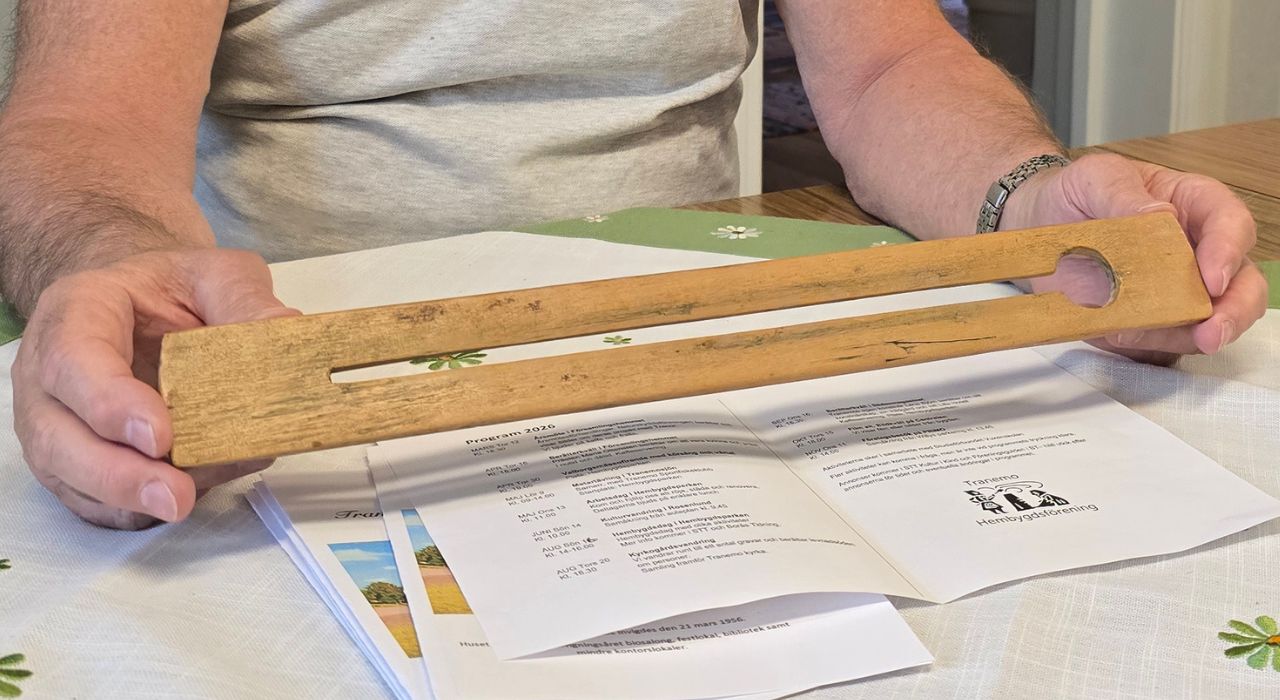
When we settle down in the kitchen for coffee and homemade treats, he pulls out an elongated wooden object with a groove in the middle.
– Do you know what this is?
We look at the object, twist and turn it, and guess freely, but none of us gets it quite right. It turns out to be a polishing tool for uniform buttons, a simple but clever aid to avoid getting polish on the fabric.
– If no one knows what such things were used for, the knowledge will eventually be forgotten. It is important that our history does not disappear. We want people to be able to take part in it and understand how society has developed, Bertil explains.
It is easy to understand what he means. The object itself may not be remarkable, but the story behind it is. And perhaps that is exactly why the museum has become so important.
A museum is emerging
The museum is the result of a leader project, aimed at developing the heritage park as a meeting place and tourist destination. A crucial part of the initiative was the new staircase built between the warehouse's floors. It may sound like a small change, but it has had great significance.
– The staircase was actually a prerequisite for being able to use the building in the way we do today. Without it, we would not have been able to create the museum on the upper floor, says Bertil.
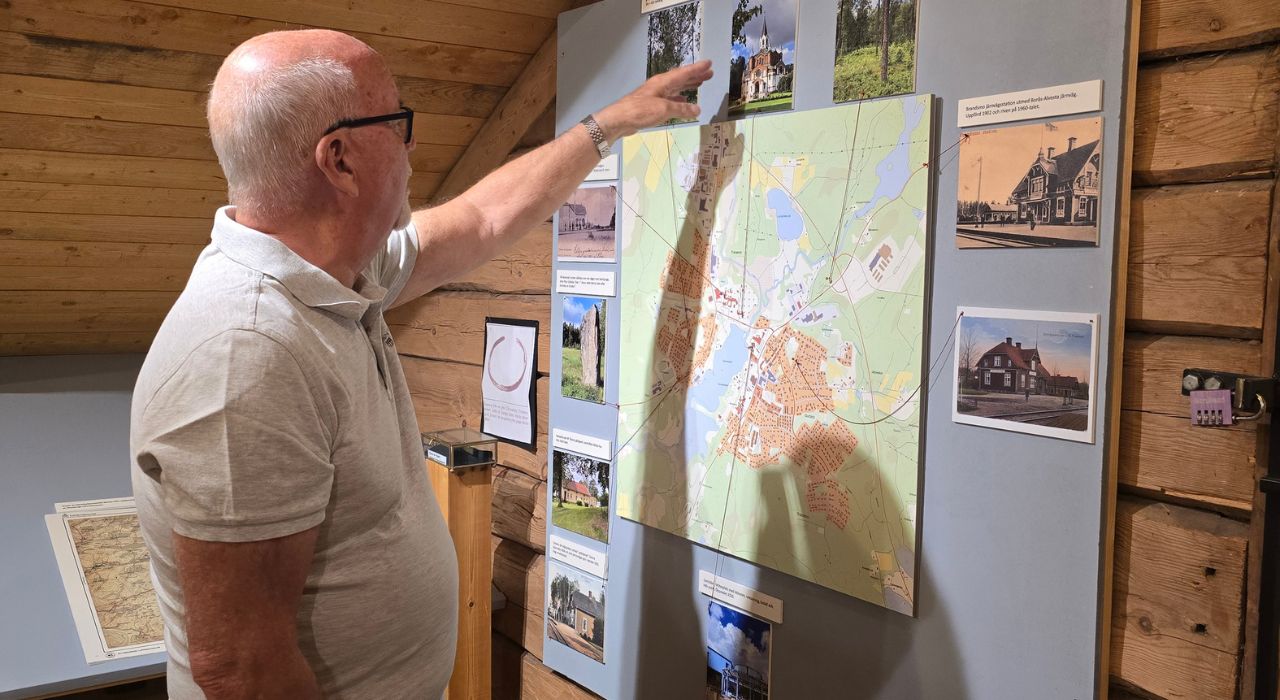
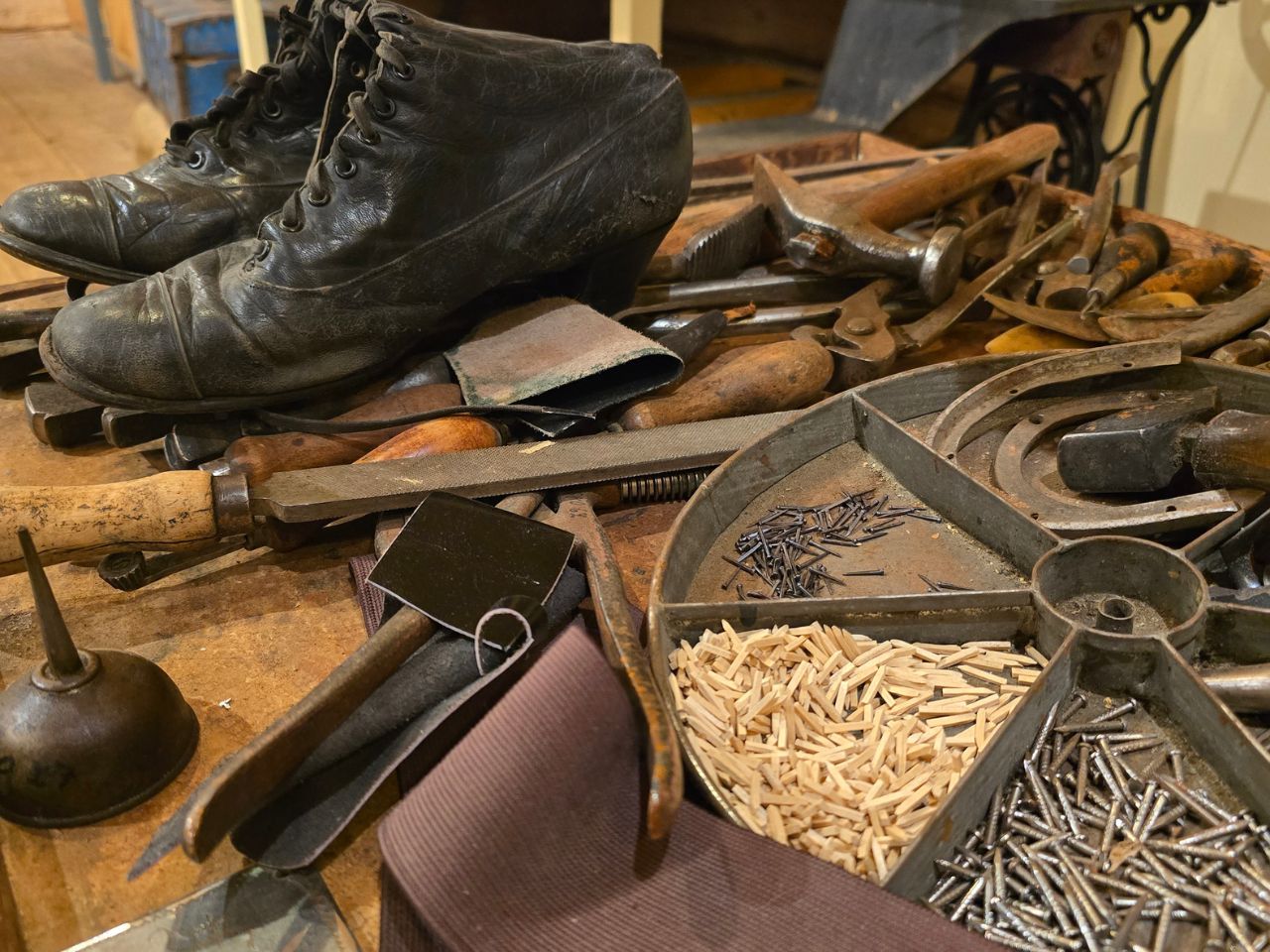
In the museum, visitors encounter different environments that tell about, among other things, shoemaking, wood processing, and older iron production. Nothing has been left to chance here. Objects, photographs, and texts interact to tell the story of the people who have lived and worked in the countryside. What strikes us is that it does not feel overcrowded. On the contrary. The objects have space to speak for themselves, and visitors have time to pause and take in what is displayed.
Bertil describes himself as a history nerd.
– We have learned about kings in school. But local history is just as exciting.
It is clear that he means it. Behind almost every object is a story – about people, businesses, and crafts that have shaped the countryside.
When history moves out of the books
Since the museum was inaugurated, the collaboration with the school has grown. Previously, it was often the heritage association that initiated contact. Now the inquiries come from the schools themselves. Recently, around 60 students from grades 2 and 3 visited the museum.
– It is something different than reading about history in a book. Here you can see the things for real.
And certain parts make a particularly strong impression. Bertil shares that children are often fascinated by the outdoor toilet. The fact that people actually lived like that feels almost incomprehensible to many of today's students.
The museum is at the same time only a part of the operation. The local heritage park has become a meeting place where lectures, exhibitions, and other activities gather people of different ages. Bertil shares that the association consciously tries to combine different arrangements to attract more visitors.
– We notice that the interest is great; when we organize activities, a lot of people come.
An important starting point is that it should be easy to participate. Therefore, the association has chosen to keep the thresholds low. The membership fee is low, and most activities are free of charge.
At the same time, collaborations with other actors have grown. The contact with both the school and SPF has further developed, and the association actively seeks new collaborations. Recently, for example, an event was held together with the local fishing association.
– We are constantly trying to find new ways to reach people and create activities together with others. This makes the operation both more fun and more vibrant.
Role model for others
When we step down from the stairs of the museum, we pass several of the awards that the association has received in recent years. Tranemo Heritage Association has been recognized both locally and regionally for its work and has been named the heritage association of the year and the cultural historical association of the year.
The association has also become somewhat of a role model for others. The work with digitization has sparked interest far beyond the municipality, and Bertil notices that other associations are following the work, drawing inspiration, and learning from what is being done.
When Bertil looks ahead, his thoughts are primarily about continuing to develop the place and create new meetings between people.
– History becomes valuable only when it is shared. If we can get more people to discover their own locality and feel involved, then we have succeeded.
About the project
Project period: 2023-2024
Project owner: Tranemo Local Community Association
Project manager: Bertil Olsson
About the financing
- Leader support: 101,192 SEK
- Co-financing: –
- Total funding: 101,192 SEK
- In addition to the above, the project has contributed with non-profit commitment worth SEK 178,500.